Your browser doesn't seem to support JavaScript, or it is turned off.
event

From Amulet to Art Nouveau

a Thousand Years of Arab-European Exchange in Printing and Book Design

  • Amulet-Egypt.jpg

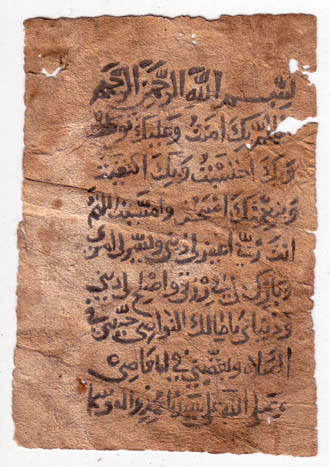
    Amulet-Egypt.jpg - 

    GA17. Arabic printed amulet from Egypt, ca. 13th century.

The history of printing in the Arab world and Europe is the story of a 500-year exchange of technology, imagery and design. The Arabs adopted printing long before Gutenberg, but did not use it for book production; the technique, nevertheless, may possibly have influenced the later development of printing and book production in Europe.

  • Germany-Speier1505.jpg

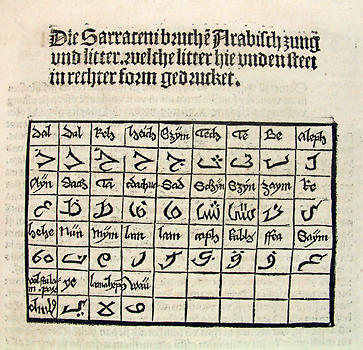
    Germany-Speier1505.jpg - 

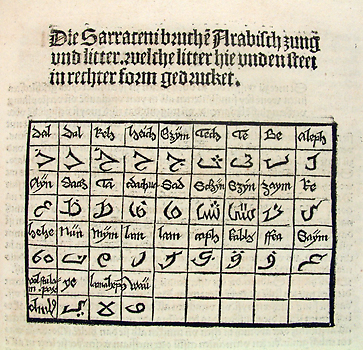
    Germany-Speier1505. From Breydenbach, B.von. _Die heilige reysen gein Iherusalem_ 3rd German ed. Speyer, 1505

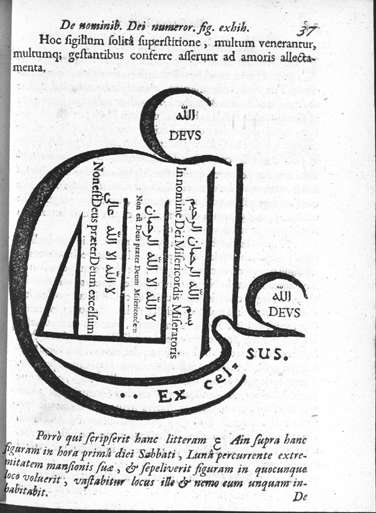
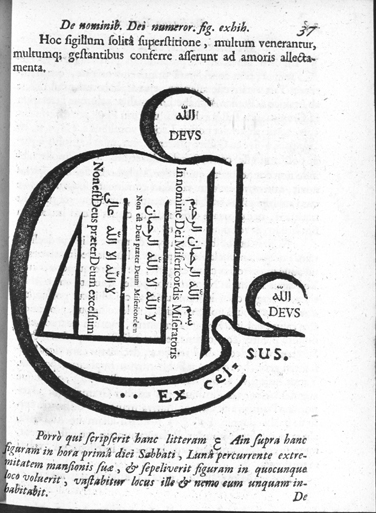
The first books containing Arabic script were printed in Europe, and were part of the Renaissance adoption of Arab/Muslim symbolism and imagery, from as early as the incunable period (15th century). During the next three centuries many European printed books continued to convey such "exotic" characters, decoration and iconography from the Ottoman domains and beyond. These sometimed purveyed mystification, intended to create or reinforce a sense of secret and unassailable erudition on the part of their purveyors; but, the development of Arabic typography in Europe also served to provide textual knowledge of the Arab/Muslim "Other ". While this development was hampered by European lack of knowledge and appreciation of the Arabic scribal and calligraphic tradition, it did establish the technical basis of Arabic typography, which later laid the foundation for print culture in the Arab world itself.

63 1 1. From Podesta.jpg63 1 1. From Podesta.jpg63 1 1. From Podesta', J.B. _Divino favente numine assertiones_, Vienna 1669.

Meanwhile, the Ottomans themselves discovered printed books. The first ones in Arabic and Turkish which they encountered came from Europe, and they brought new features of book design and iconography from an alien world. Then in the 18th century books began to be printed in the Ottoman empire, which themselves incorporated more subtly innovative elements. By the mid-19th century a revolution had taken place in the production and distribution of texts, decoration and images which both reinvigorated the Ottoman and Arab sense of Muslim self-identity and at the same time confronted them with a Europe-derived modernity which gradually transformed both their use of texts and their graphic universe.

This paper will trace and illustrate some of the currents and counter-currents in this exchange of printed script, images and symbols between Europeans and Arabs.
    • Symposium Program

      Khatt Kufi Kaffiya | Symposium on Arabic Visual Culture

      • Syrian Lingerie

        Syrian Lingerie - 

        Image from the publication “The secret Life of Syrian lingerie: Intimacy and Design”. This book will be published by the book will be published by Chronicle Books in autumn 2008. Photo by Omar al-Moutem.

      We'll have the whole day to ourselves in the theatre of the brand new public library of Amsterdam (OBA)

      Admission and registration is from 9 on and the programme starts at 10:00 sharp.

      We'll have lunch at the 8th floor restaurant with an amazing view over Amsterdam.

      At 17:00 we'll wrap up and move to the next-door PostCS building where we'll celebrate the opening of El HEMA at Mediamatic!

    • event: khatt kufi & kaffiya

      Cultural Survival Kits and Other Practical Ideas

      24 Aug 07 10:10 Huda Smitshuijzen AbiFares - Cultural survival kits… it would be real nice if we had ready-made ones to give out at the door with simple instruction manuals....
    • event: khatt kufi & kaffiya

      Google in Arabia: Introducing the Khatt Network for Arabic typography

      24 Aug 07 10:30 Willem Velthoven - Movable type was the the new media of the 15th century. In Europe many rulers felt threatened by it, and they were right. They did...
    • event: khatt kufi & kaffiya

      Visiting Shiba

      the National Museum of Yemen

      24 Aug 07 10:50 Jelle van der Toorn Vrijthoff - The National Museum of Yemen in the capital city of Sana’a was neglected when I arrived in 1998. The buildings needed repairs all...
    • event: khatt kufi & kaffiya

      2
      Dangerous Lingerie and Other Mid East Street Stories that Spook the West

      22 Aug 07 11:20 Malu Halasa - The Arab street – its vibrancy, innovativeness, traditions of design and contemporary expression – has been obscured by geopolitical...
    • event: khatt kufi & kaffiya

      The Clash of Motion Picture

      a Concise Look Back

      24 Aug 07 11:40 Khaled Ramadan - Talk and short video screening by Khaled D. Ramadan. Planet of the Arabs by video maker Jacki Salloum.
    • event: khatt kufi & kaffiya

      1
      On Activism, Design and Politics in the Arab World

      the Case of Visual Culture in Beirut

      24 Aug 07 12:00 Zeina Maasri - Politics, in the form of contemporary cultural resistance projects and in the history of Arab political posters, will be the subject of...
    • event: khatt kufi & kaffiya

      Marhaba

      In Search for a Hybrid Visual Language

      24 Aug 07 13:10 Jacques Koeweiden - The Dutch government stimulates contact between groups of different backgrounds by establishing a House for Cultural Dialogue in the...
    • event: khatt kufi & kaffiya

      Unfamiliar Territories, Arabic Type and Modern Dance

      24 Aug 07 13:30 Peter Bilak - Peter Bilak will speak about methodologies of approaching unfamiliar areas of work.
    • event: khatt kufi & kaffiya

      Interface, Expressive Western and Arabic Calligraphy in Dialogue

      24 Aug 07 14:20 Brody Neuenschwander - For nearly twenty years, Brody Neuenschwander has worked with the British film maker Peter Greenaway to produce calligraphy for films,...
    • event: khatt kufi & kaffiya

      The Enchanted Canary*

      Contemporary Arabic Children's Books

      24 Aug 07 14:40 Nadine Touma - 'If I do not mistake, you come from far. May I ask where you are going?' 'I will tell you,' answered Désiré, 'though most likely you...
    • event: khatt kufi & kaffiya

      Writing From The Margins

      Technological Narratives of Arabic Typography

      24 Aug 07 15:00 J.R. Osborn - Narratives of Arabic typography shift between technological exclusion, historical resistance, and cultural rediscovery. From...
    • event: khatt kufi & kaffiya

      The Current Market for Arabic Fonts

      Recent Developments and Consumer Needs

      24 Aug 07 15:20 Nadine Chahine - The Arabic type market has changed dramatically in the last few years, and this has been mainly inspired by recent technology...
    • event: khatt kufi & kaffiya

      The Typographic Landscapes of the Arab World

      Research on Aesthetic Trends and Legibility

      24 Aug 07 15:40 Tarek Atrissi - Tarek Atrissi’s will present a research on aesthetic trends and design conventions in the Arab world, through the analysis of selected...
    • event: khatt kufi & kaffiya

      The Typographic Matchmaking Project: Developing Dual-Script Fonts

      24 Aug 07 16:10 Willem Velthoven - Willem Velthoven interviewing the Typographic Matchmaking Type Designers: Nadine Chahine, Gerard Unger, Tarek Atrissi, Peter Bilak,...
    • Book: 

      1Typographic Matchmaking

      This book is now available for ordering online from Nijhof & Lee and BIS Publishers.

      Huda Smitshuijzen AbiFares - As the world moves forward towards a more international (design) society, the need for fonts that can support multi-scripts becomes ...
    • event: Amsterdam, Stichting Mediamatic

      El HEMA Project

      El HEMA is a non-commercial cultural project by the Mediamatic Foundation in Amsterdam.

      24 Aug 07 17:00 > 6 Jan 08 What would an Arabic HEMA look like? Halal sausage? Arabic chocolate letters? Affordable high quality headscarves? 3 Palestinian scarfs...
    • conference program: 

      Khatt Kufi Kaffiya, the printable symposium program

      Lectures are described in detail with timings and links to the speakers' biographies.

      The symposium program has been evolving and includes topics of every aspect of contemporary Arabic visual culture and identity, going ...