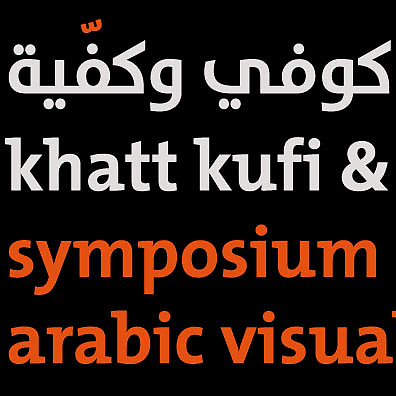
Iranian typography
An introduction for "Molavi" catalogue, 2004, by Bijan Sayfouri
During recent decades, today's world graphic design, entering new visual spaces, has started a movement a prominent example of which is typography. Undoubtedly, the most obvious definition of typography is its use of the letters as the main element to create graphicÊworks. In western graphic design, the arrangement and application of Latin letters manifest the specific features of western aesthetics, philosophy, and visual infrastructures. Latin letters, due to their own structure and arrangement, provide abundant possibilities for designers to create new forms. On the other hand, the variety and systematic geometrical structure of Latin letters yield a wide field to make some changes in the letters or mix them in order to reach novel samples. They also furnish plenty of chances for personal experiences.
In Iran, although Persian letters are similar to Arabic letters, their evolution inside the Iranian culture, like other kinds of arts in this country, is quite distinguished among the other comparable cultures. The position of the letters, method of writing, and calligraphy in Iranian visual arts dates back to a far point in history. The ancient background of calligraphy and its application in pottery and handicrafts, the Koranic method of transcription, and the application of the letters and characters in Iranian architecture are brilliant samples of the tradition of Persian method of writing and its popularity in the society. The spiritual background of writing and calligraphy in Iran has originated a unique type of aesthetics which has been polished and evolved during centuries and has increasingly gained its everlasting beauty.
Some questions, however, are raised. Can this tradition itself be called typography? In Iranian typography, should the letters, used in typewriters, only be used? Can a typographic work be created by Nastaligh, for instance? Is the definition of Iranian typography equivalent to its western counterparts? Has the peculiar aesthetic and arrangement of Persian letters been the only responsible factor for the difficulties in designing Iranian letters which, in turn, have caused limited variety of the typefaces?
Considering all this, what is the actual reason of the attractiveness of Iranian typography? Although the specific feature of the Iranian typographic style which has been introduced to the world of graphic design is characterized by Persian letters, it seems that more work should be done in order to reach the position that Persian letters and characters deserve in today's typography. One of these experiences is Molavi, being the second exhibition of a set of Iranian typography exhibitions.
Bijan
Mostafa
kingkhat
amal